
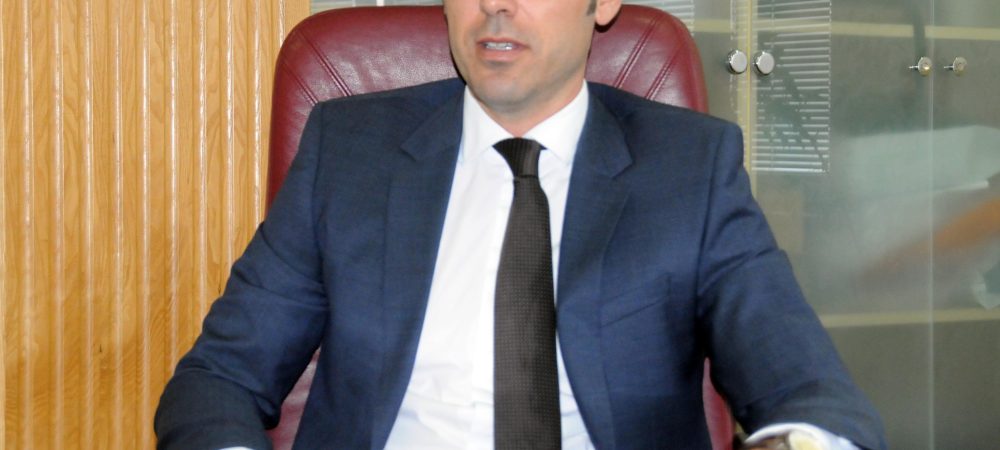
The receivables that CGES has from EPCG are jeopardising the company's liquidity during its largest investment cycle, which is creating further problems. Legal disputes are ongoing, and the expectation at CGES is that the receivables will be collected and they will be extricated from a situation that our company has not caused by any of its actions, says Bulatović.

The Executive Director of the Montenegrin Electricity Transmission System (CGES), Ivan Bulatović, has announced that 40 million euros will be invested in the electricity transmission network during this year.It is planned that this year, CGES will invest just over 40 million euros in the system, of which almost 26 million euros for projects relating to interconnection with Italy is a loan secured on favourable terms from international banks,' Bulatović said in an interview with Portal Analitika.He announced the imminent formation of an electricity exchange in Montenegro.
Work is well underway on the formation of an electricity exchange. Three energy entities, CGES, EPCG and COTEE, have been recognised as the founders of the new company, with openness to all entities. The preparatory work on the company's founding agreement and statutes is underway, in order to create the conditions for its full-scale launch as soon as possible,' stated Bulatović.
ANALYTICS: The Italian company Terna has completed the laying of the submarine cable. When will the cable be operational, that is, when will the first kilowatts flow? What progress has been made on the project on the Montenegrin side, concerning the construction of the transmission line?
Bulatović: The subsea interconnection project with Italy is a very complex project which involves the commitments of multiple parties. We are exchanging information with our Italian partners and monitoring the project's implementation. Accordingly, the submarine cable and infrastructure, being built by our strategic partners Terna and CGES, are expected to be completed in the second half of 2018.
The fact that the part of the project being implemented by CGES involves the construction of a substation and a transmission line, which stretches across the entire territory of Montenegro along a route of over 180 km, with more than 650 pylons and over 130 km of access roads, indicates that this is a demanding project which, despite numerous challenges, is progressing at a satisfactory pace.
The contractors on site are encountering the usual problems for this type of project, related to the inaccessible and demanding terrain in one area, as well as the fact that in certain locations, work can hardly be carried out for several months due to unfavourable weather conditions.
Additionally, the issue of securing the properties required for the project's implementation is causing dissatisfaction among some of the owners, with CGES attempting to find a compromise in accordance with the legal solutions and regulations governing this matter.
ANALYTICS: What are the benefits of this project?
Bulatović: In addition to the importance of the project for the general public, as presented so far, it is very important to bear in mind that by signing the Athens Memorandum and other acts, Montenegro has committed to actively participating in creating the conditions for the functioning of a free electricity market.
Under such conditions of a single European energy market, interconnection with neighbours is a necessity. The benefits of the project's realisation also include a direct connection to the EU electricity market, and an increase in the security of electricity supply for Montenegro and the region during periods of extreme drought, through the opening of another border for cross-border electricity trade.
ANALYSIS: Montenegro is also positioning itself as the region's energy market...
Bulatović: That's right. Montenegro will position itself as an important electricity hub in the region, creating the conditions for the full opening of the electricity market, which should result in greater competition.
A potential opportunity also arises from the growing interest in other connection points between our system and neighbouring systems, thereby increasing the value of these cross-border transmission lines and boosting the revenues from their operation for electricity transit.
ANALYSIS: Can consumers expect lower electricity transmission tariffs?
Bulatović: Certainly. In the end, this also reduces the tariffs for the transmission of electricity paid by domestic consumers.
I would also highlight that our internal network will be strengthened, thereby ensuring a more reliable supply of electricity to tourist centres, and also contributing to increased interest in the construction of new sources.
ANALYTICS: When will the electricity exchange company be established in Montenegro? What have you done in this regard?
Bulatović: Work is well underway to establish an electricity exchange in Montenegro. Three energy entities—CGES, EPCG and COTEE—have been recognised as the founders of the new company, with openness to all entities. Following good European practice, as well as examples from the region, the Ministry of Economy, with the support of the aforementioned companies, has launched a series of activities in this field. The preparatory work on the founding agreement and the company's statutes is underway, in order to create the conditions for its full-scale launch as soon as possible.
ANALYTICS: What is the financial situation at CGES, given the unresolved debtor-creditor relations with EPCG, worth 15 million euros? What progress has been made with the court case, given the rumours that this debt is jeopardising the financial situation at CGES?
Bulatović: The receivables that CGES has from EPCG are jeopardising the company's liquidity during its largest investment cycle, which is creating further problems. Legal proceedings are underway, and CGES expects to recover the receivables and resolve the situation, which our company did not cause through any of its own actions.
The stable operation of the electricity system requires all parties to act in accordance with legal regulations and the rules defined by the Energy Regulatory Agency and, in our firm conviction, demands the building of partnership relationships between energy companies and the resolution of issues, as far as possible, outside of the courts.
ANALYTICS: How much have you planned to invest this year?
Bulatović: This year too, despite low liquidity, CGES has continued its strong investment cycle. It is planned to invest just over 40 million euros in the system this year, of which almost 26 million euros in loan funds, secured on favourable terms from international banks, will be for projects relating to interconnection with Italy.
Last year, a financial agreement was signed providing CGES with a grant of 25 million euros from European funds, which will be invested in our system this year and in the years to come, at no cost to Montenegrin consumers, thereby easing the transmission tariff.
ANALYTICS: How did you cope with the storm that hit Montenegro at the beginning of the year?
Bulatović: The storm that struck Montenegro during January is one of those that reminds us of our powerlessness in the face of nature's force. However, through constant investment in the system and maintaining the operational readiness of our facilities, we managed to ensure a safe and reliable supply for all consumers on the transmission network.
On the other hand, eleven pylons of the coastal 110 kV transmission line from Budva to Bar were brought down to the ground by the force of the wind, combined with the additional load from ice and snow on the conductors. Nevertheless, we managed to rectify the consequences of the accident in a relatively short period and restore the network to its normal operating state.
ANALYTICS: How difficult is it, given the circumstances, to rapidly develop a transmission system whilst enabling access for all connecting users (renewable sources, motorways, tourist facilities)?
Bulatović: In accordance with the provisions of the Energy Act, CGES is obliged to develop and improve the transmission system, in order to enable non-discriminatory access for all users connecting to the transmission system.
CGES is making significant efforts to renovate existing facilities and build new ones, in order to keep pace with the development trends of the state of Montenegro. This primarily refers to the development of the energy sector, in the form of constructing new substations and power lines, to meet the needs of the tourism industry and in accordance with the highest standards.
Admittedly, it is a great challenge for us to implement complex and demanding projects within relatively short deadlines, because in addition to the CGES teams, which we are trying to strengthen, we expect strong support from state administrative capacities in the areas of spatial planning, public procurement, property and legal matters, the regulatory framework and the like.
However, CGES is currently, and I believe will continue to be, rising to all challenges, and within its remit and capabilities is giving its utmost to achieve the goals set out in the Energy Development Strategy of Montenegro and the Development Action Plan.
Predrag ZECEVIC