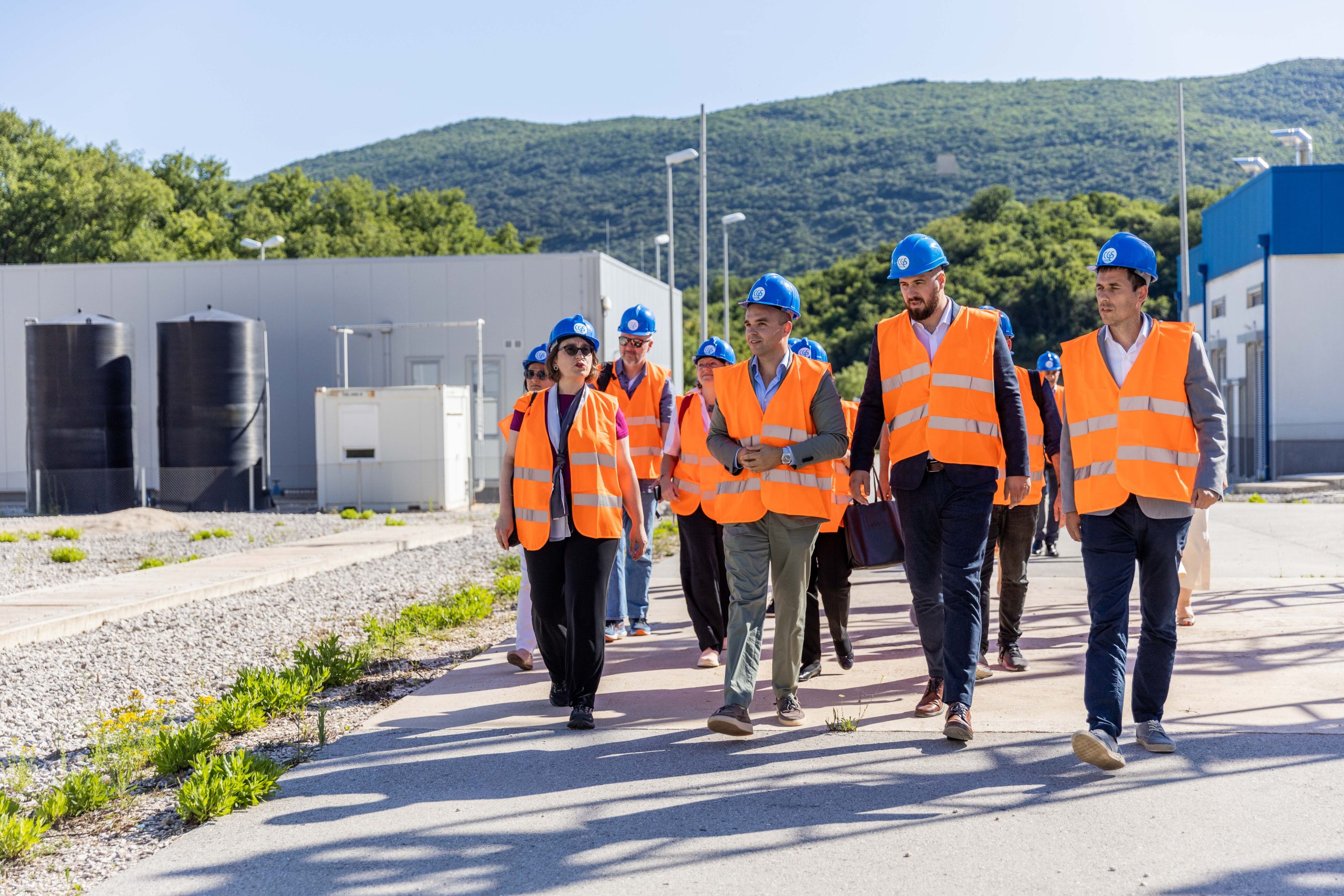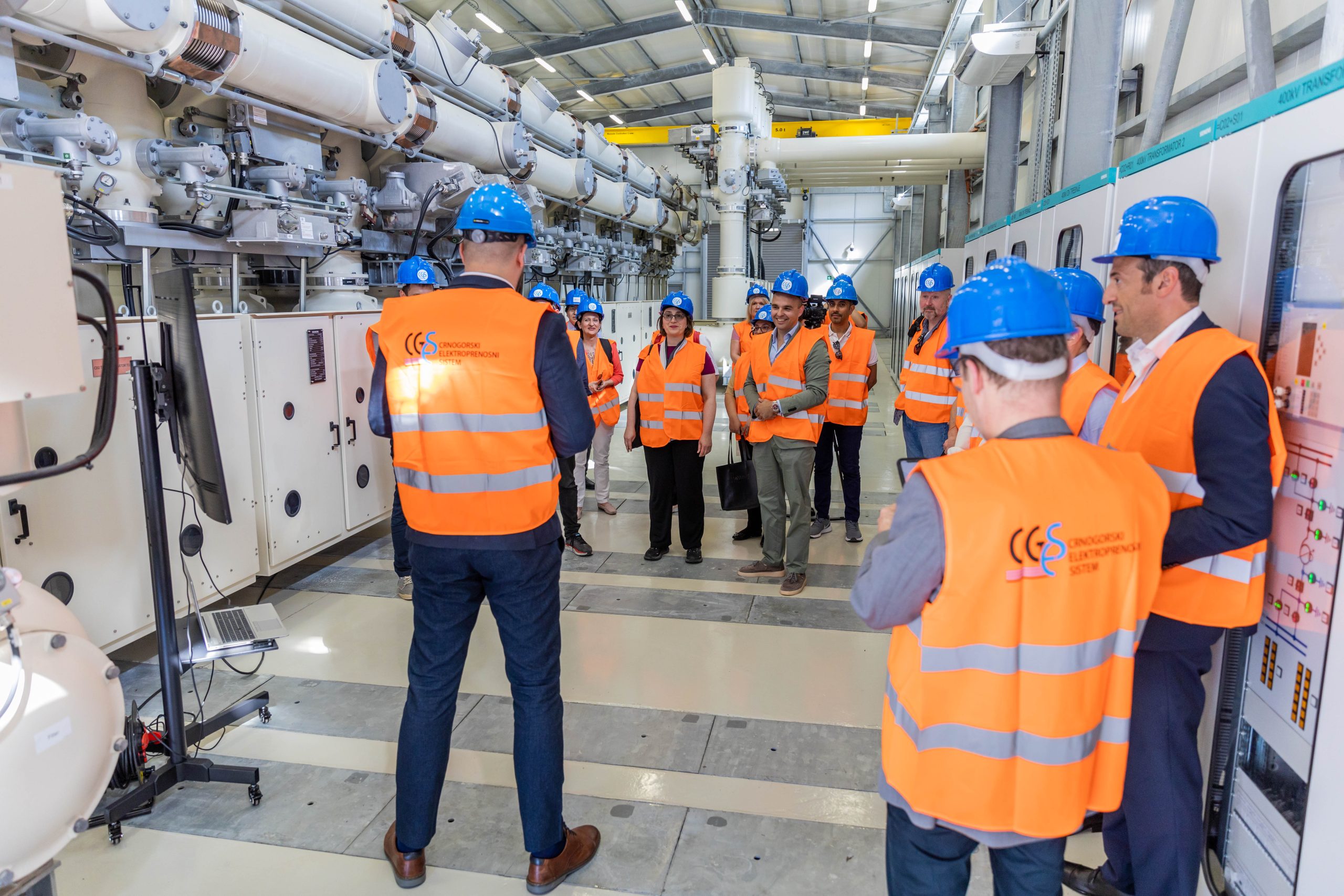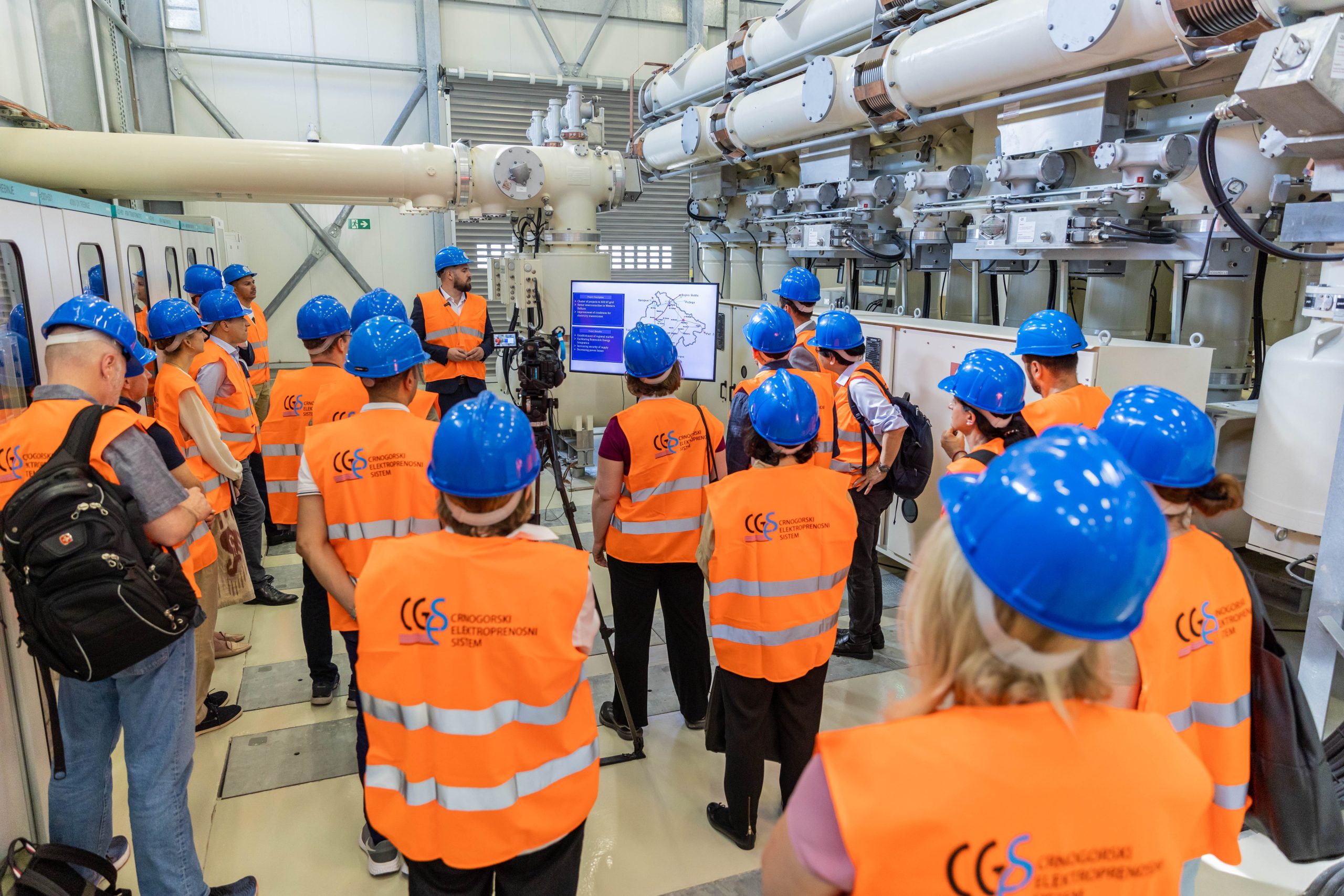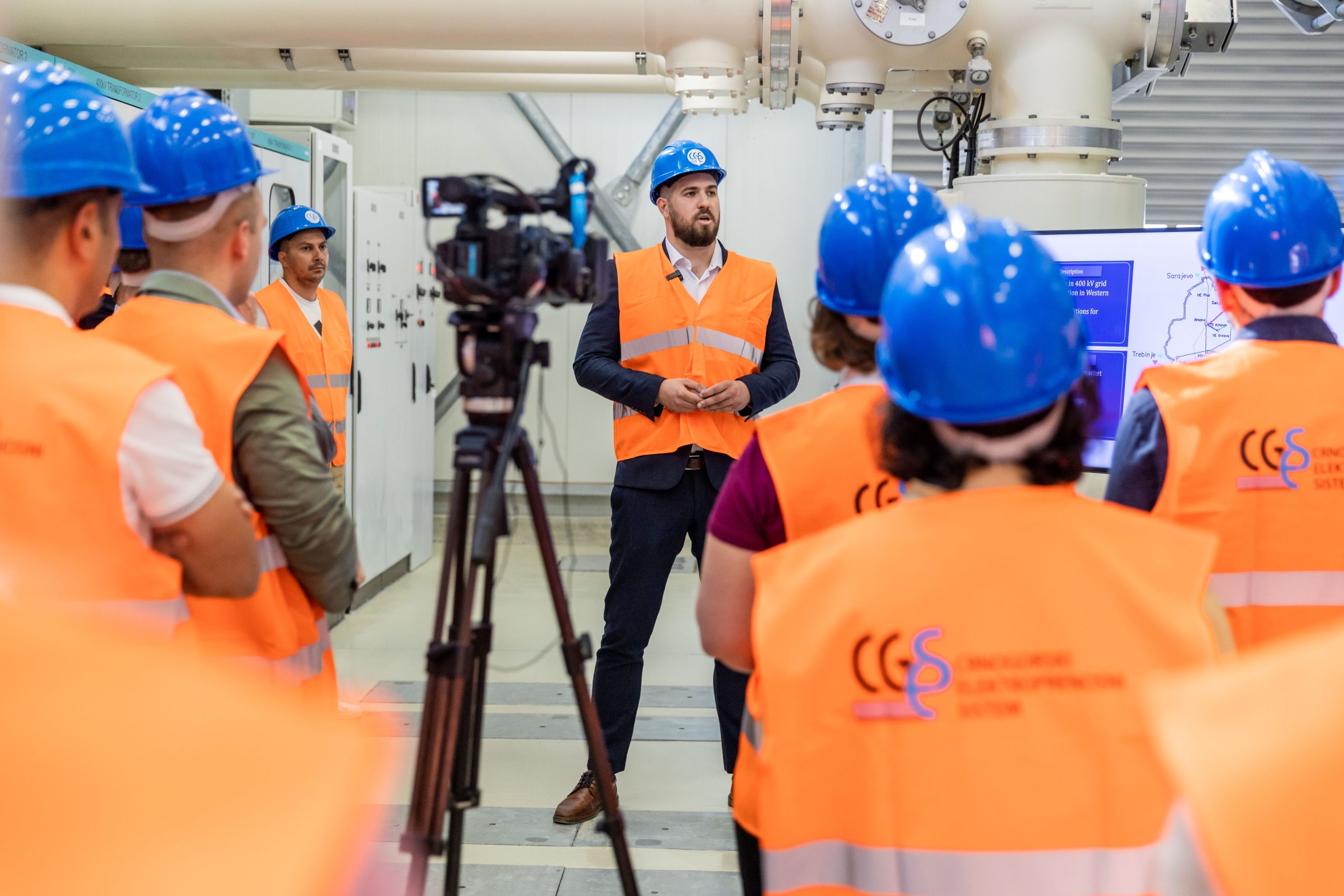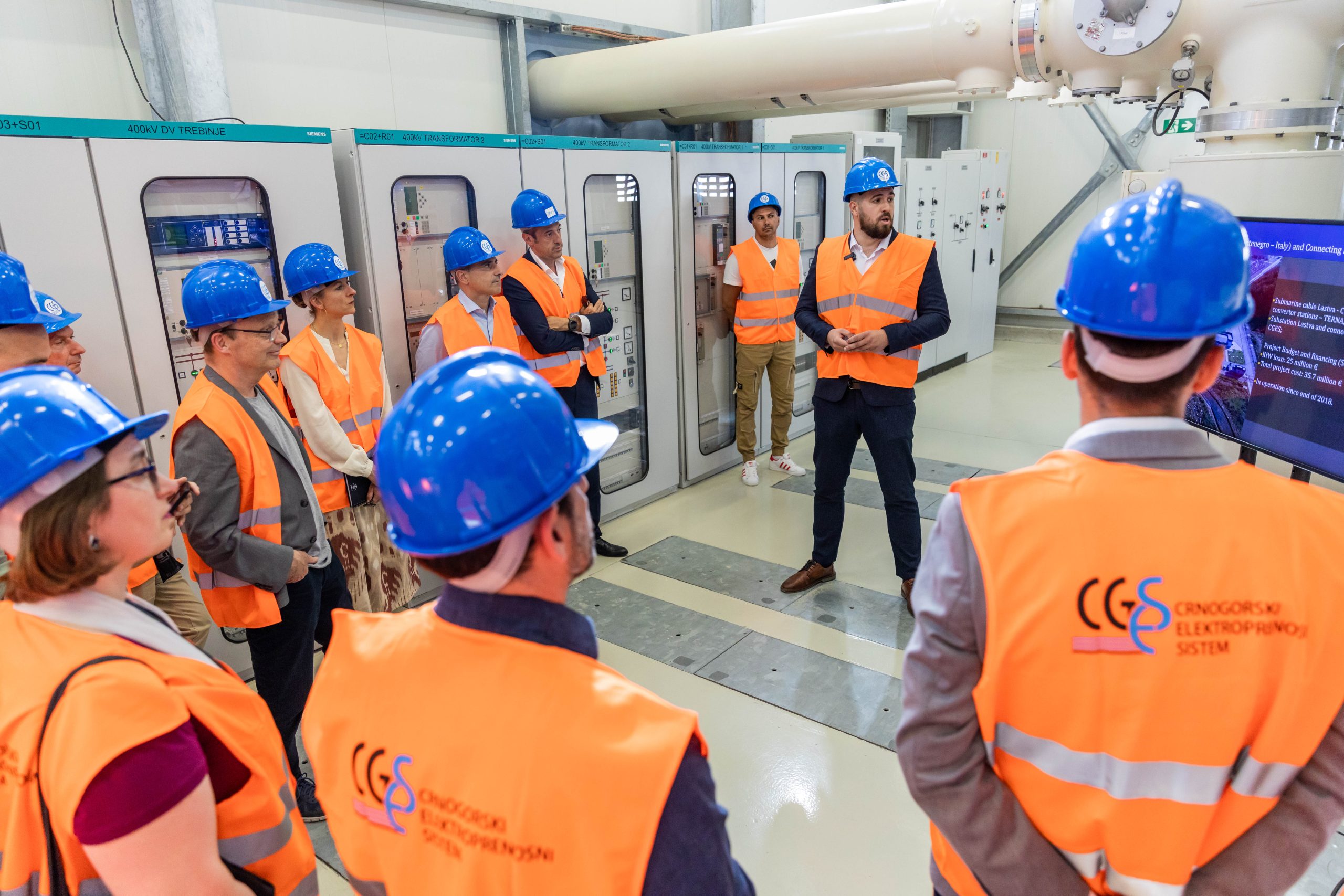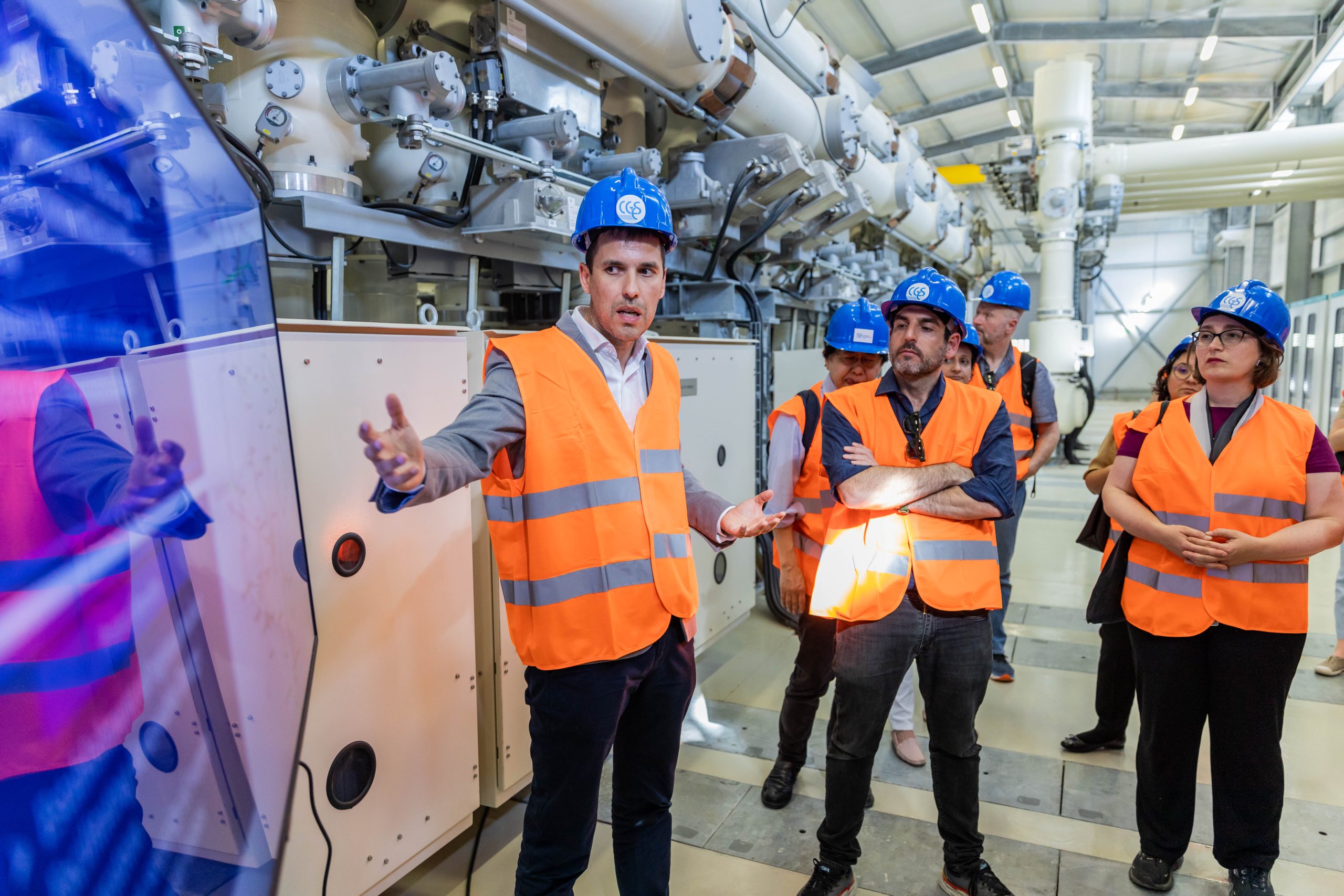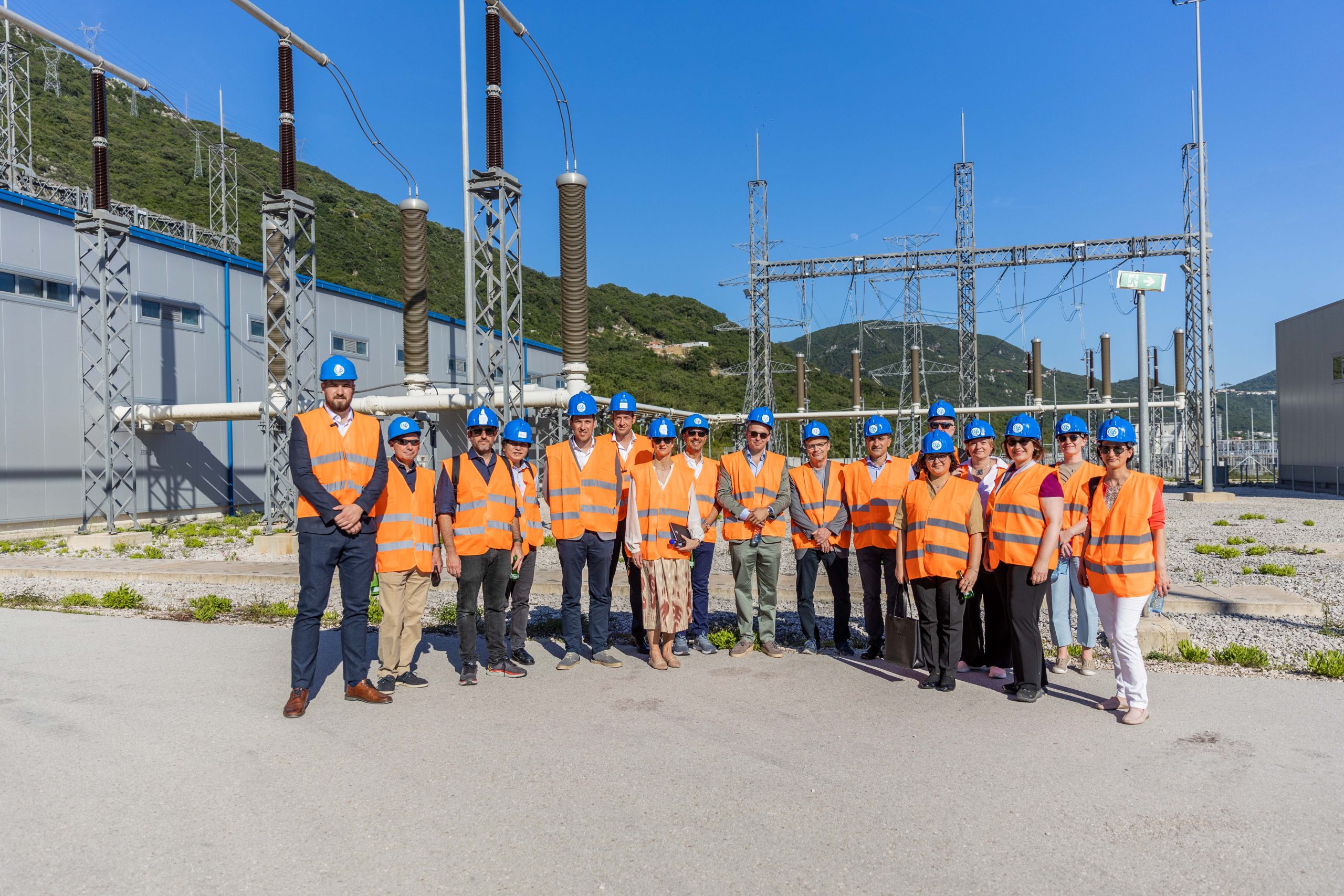
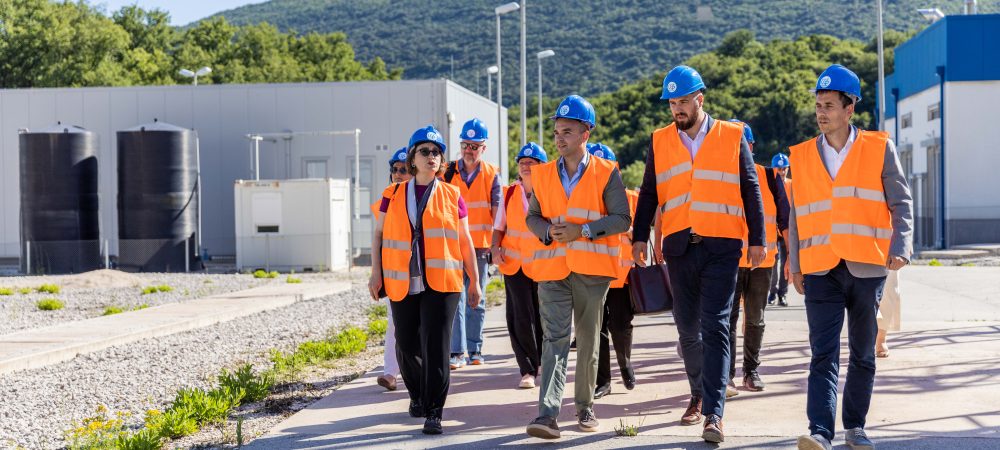
The Trans-Balkan electricity corridor represents a significant step towards the energy integration of the region, increasing energy security and efficiency, and provides the basis for the further development of renewable energy sources, and the 'Lastva' substation, with its advanced technology and key role in the transmission network, is a symbol of the successful realisation of this ambitious project.
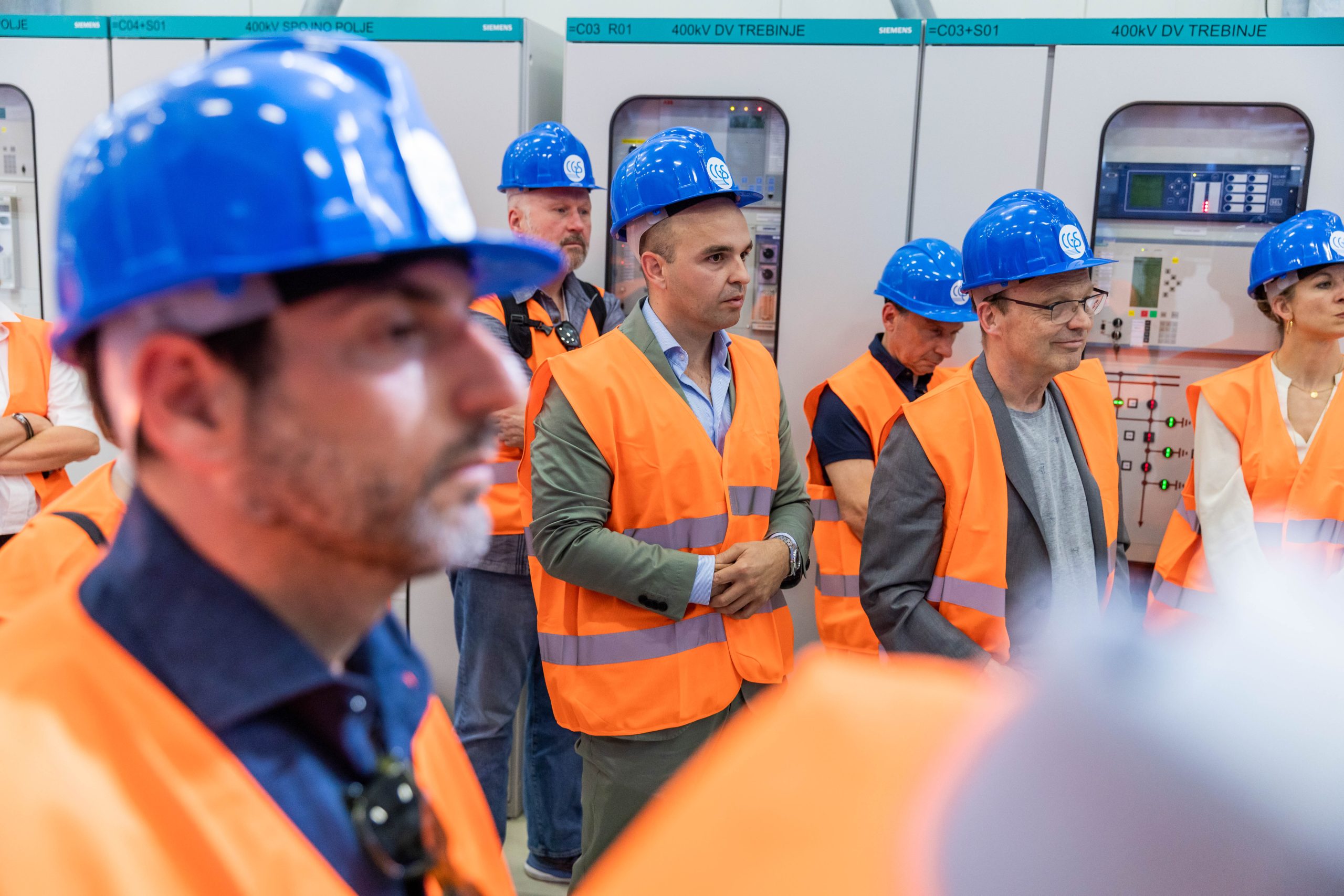
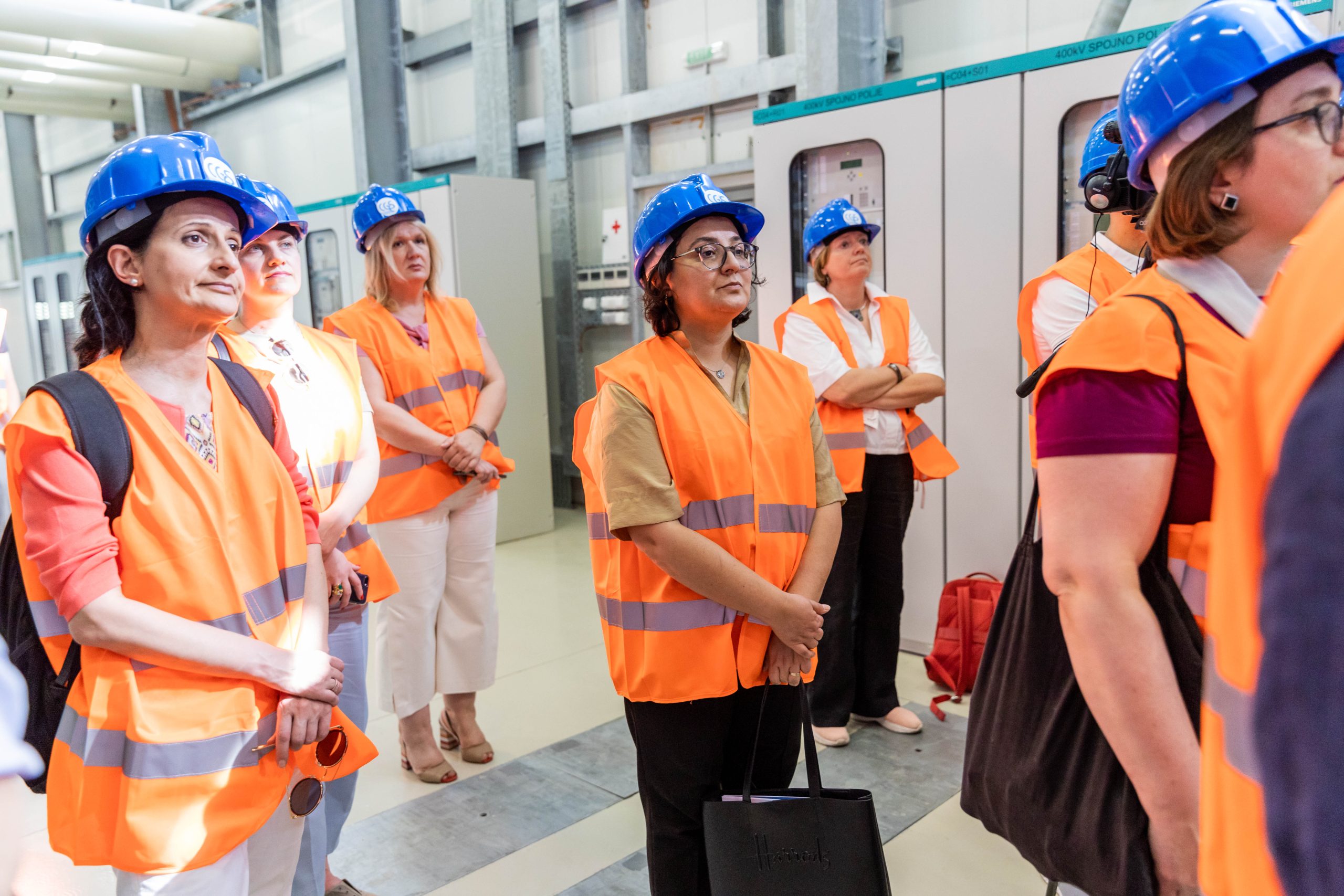
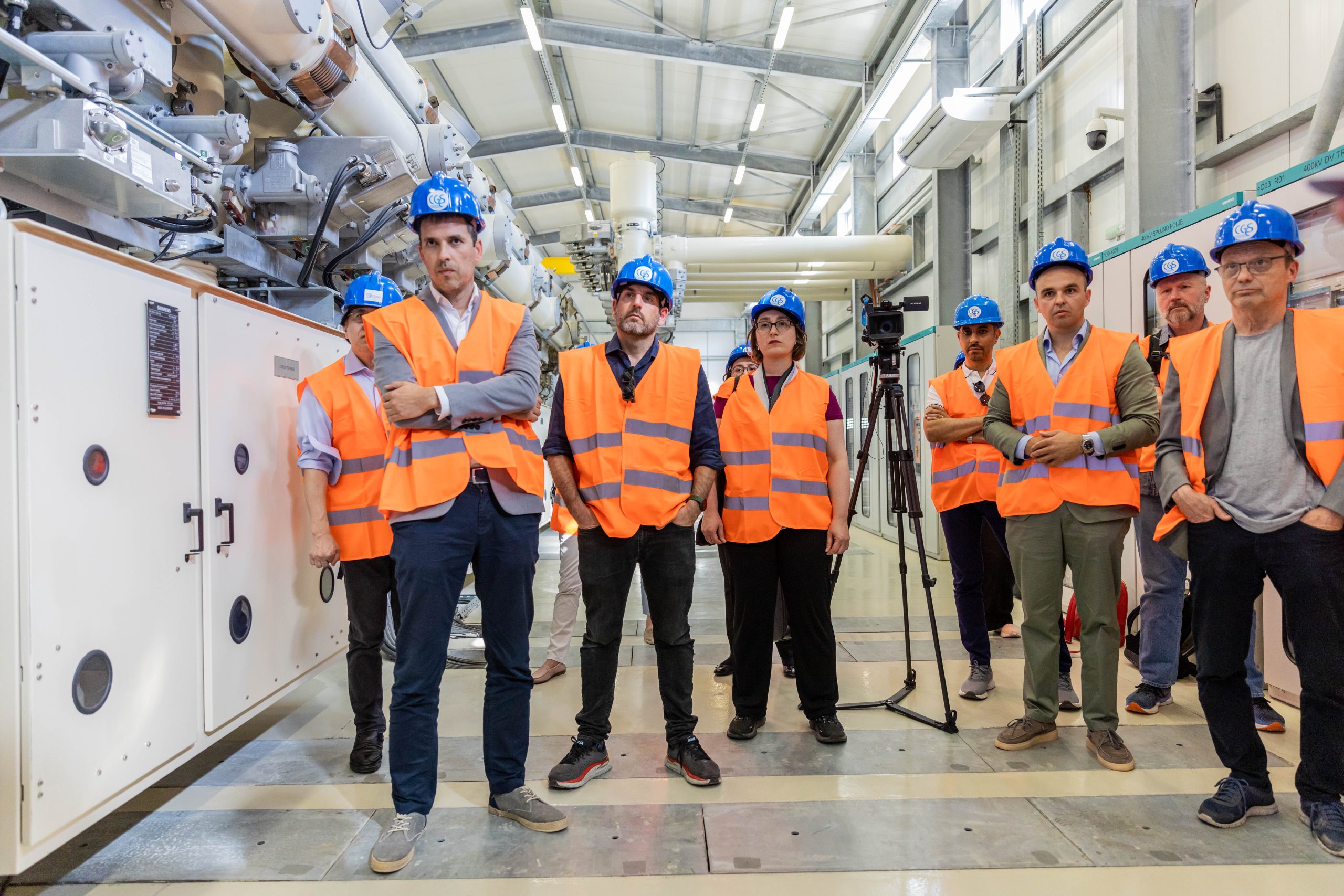
This was assessed during a visit by representatives of the European Bank for Reconstruction and Development (EBRD) to TS 'Lastva', who were welcomed by representatives of the Montenegrin Transmission System Operator (CGES).
The CGES representative, the project leader for the construction of this transformer substation, Aleksa Knežević, He said that the visit to the TS 'Lastva', which is one of the most important substations in the Montenegrin electricity system, is an opportunity to reflect on the significant goals and successes of the Trans-Balkan electricity corridor.
"This project, part of a wider initiative, aims to improve the energy interconnection between Montenegro, Serbia and Bosnia and Herzegovina, and to connect them with neighbouring countries. Ultimately, this will lead to the formation of a regional electricity market in the Western Balkans," Knežević explained.
He stated that the objectives and benefits of the project are: enabling the connection of additional renewable energy sources, increasing the security of the electricity supply, and reducing losses in the transmission network.
Speaking about key projects and technological innovations, Knežević said that for the subsea interconnection project between Montenegro and Italy, TERNA laid 423 kilometres of subsea cable, connecting the converter stations in Lastva and Cepagatti in Italy.
"Work on the 'Lastva' substation began in 2014, and it was commissioned in 2018. The total cost was 35.7 million euros, financed by a KfW loan and CGES's own funds," said Knežević.
He clarified that the TS 'Lastva' uses GIS equipment, power transformers with a nominal capacity of 300 MVA and 20 MVA, and modern control and protection equipment.
Speaking about ongoing projects, Knežević said that the installation of a variable shunt reactor is underway, stating that the project's value is 14.5 million euros. The project is partly financed by a nine-million-euro loan from the EBRD, while the remainder is provided from CGES's own funds.
Knežević emphasised that the implementation of the projects to build the 'Lastva' substation and the associated transmission lines was challenging for CGES from both a technical and financial perspective, but that thanks to cooperation with colleagues, consultants, contractors and banks, all obstacles were successfully overcome.
"Today, five years after the commissioning of the project's first components, it is safe to say that we are more than satisfied, as this project plays a key role in achieving CGES's record business results," said Knežević.
He stated that the project is an example of how collaboration between financial institutions and energy companies can result in tangible, sustainable and long-term benefits for the community.
"We have seized this opportunity not only to improve the infrastructure, but also to increase energy efficiency and security, which is crucial for economic growth and the quality of life of all our citizens," stated Knežević.
The visit on behalf of CGES was attended by Dragan Perunović, Director of the Sector for Development and Investment, and Nikola Mugoša, Assistant Director of Elektroprenos, while the EBRD delegation comprised board members: Rosmarie Schlup, Yasemin Girici, Shigeto Hiki, Katherine Allen, Miglė Tuskienė, Andrew Smith, Alon Messer, Karina Karaivanova and Jan Willem van den Wall Bake.
On behalf of the EBRD management, the 'Lastva' substation was visited by: Matteo Colangeli, Regional Director for the Western Balkans; Remon Zakaria, EBRD Head in Montenegro; Oleg Levitin, Head of Political Affairs; and Isida Konomi from the Board and Institutional Affairs.