Strengthening transmission infrastructure and aligning regulation with European standards are key to the stability of the electricity system.
Strengthening the transmission infrastructure, aligning with European regulations and improving regional coordination are key to the security, stability and resilience of power systems in Montenegro and the region.
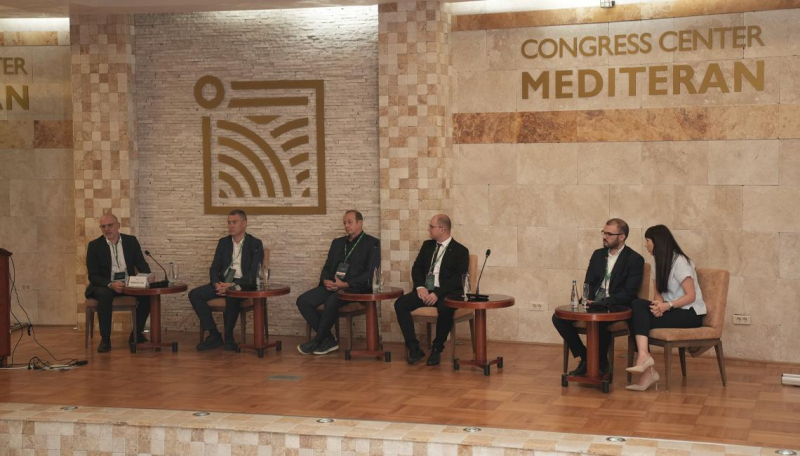
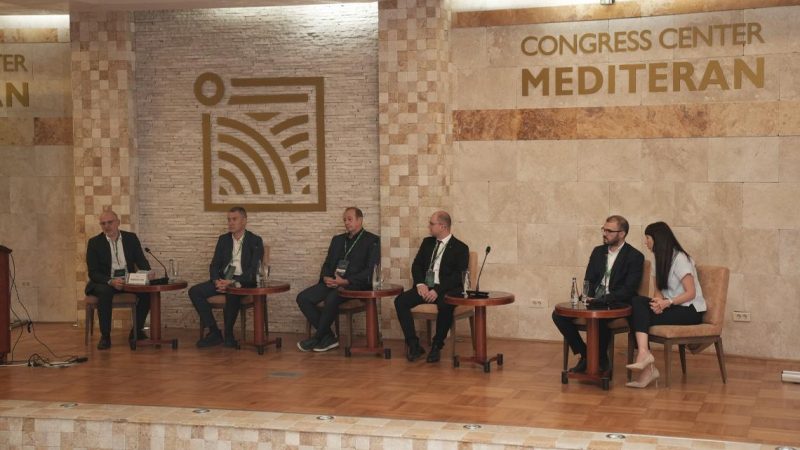
This was the message from the panel 'Modern Challenges in the Operation of Electrical Power Systems: Ensuring Stability, Flexibility and Resilience', held as part of the 9th Consultation. of the Montenegrin Committee of the International Council for Large Electric Grids (CIGRE)
Director of the National Dispatch Centre in the Montenegrin Electricity Transmission System (CGES), Ranko Redžić, believes that to hold in the region, all operators should adopt European regulations as quickly as possible and improve the coordination of system operations, in order to avoid the kind of disruptions that have occurred in the past.
"Such disruptions can never be completely prevented, but the risks can be significantly reduced and cooperation improved," explained Redžić.
According to him, the green transition requires a significantly stronger and more modern grid.
"The construction and strengthening of the infrastructure must be enabled, as it is a prerequisite for connecting renewable sources and ensuring the security of the supply to consumers, both in the region and in Europe," stated Redžić.
Speaking about the CGES projects, Redžić recalled that this year the company is completing two significant projects of regional importance – the 150-kilometre Lastva–Pljevlja transmission line and the installation of a 250 MW damper at the Lastva substation, which will enable better regulation and the reduction of overvoltage in the system.
He also announced new investments: the strengthening of the 220 kV network from the Bosnian direction to Albania, the connection to Serbia via the Pljevlja–Bajina Bašta transmission line, as well as the connection to the system of Bosnia and Herzegovina through the Brezna–Sarajevo project and the construction of the Brezna substation.
"This will enable the connection of a large number of new sources, hopefully not only renewable ones, but also new conventional power plants, such as hydro or gas-fired ones," said Redžić.
CGES pays special attention to cyber security, he added.
"The procurement of a new SCADA system is underway, which will be protected at the highest level available at this time," said Redžić.
He also stressed the importance of regular maintenance of power line routes to reduce the risks of fires and other incidents.
"This is not just an issue for CGES, but also of national importance, but our task is to regularly maintain the transmission lines and prevent events that could jeopardise the system," concluded Redžić.
Head of the Data Quality and Analytics Department at the Security Coordination Centre (SCC d.o.o.) from Belgrade, Miloš Đurđević He clarified that the company is concerned with the coordinated operation of transmission system operators, over a time horizon that spans from one year ahead right down to so-called intra-day planning, which is carried out about eight hours ahead of real time.
"The newly coordinated capacity calculation was one of the main topics on this panel. Unfortunately, our region still lacks an adequate calculation system, and time has shown that an improvement in this area must happen," said Đurđević.
Speaking about regulation, Đurđević emphasised that harmonisation is key.
"The regulation has been practically transposed from the EU framework, and it is up to the domestic regulators to adopt it with minor amendments and adapt it to our system. Our firm is ready to assist in the implementation and execution of this function in cooperation with the transmission system operators," said Đurđević.
He pointed out that cooperation at a regional level has been ongoing for a decade and has been constantly improved.
For ten years, coordination has been operating at a high level and has been making continuous improvements. I see no obstacles, only scope for further improvements, especially as new requirements are placed on transmission system operators. These requirements are also passed on to the regional security coordinators, and so far all have been successfully implemented. I believe there will be no problems in the future either," stated Đurđević.
Also speaking on the panel were: Elio Voshtina (OST), Bojan Rebić (NOS BiH) and Slobodan Marković (EKC).