
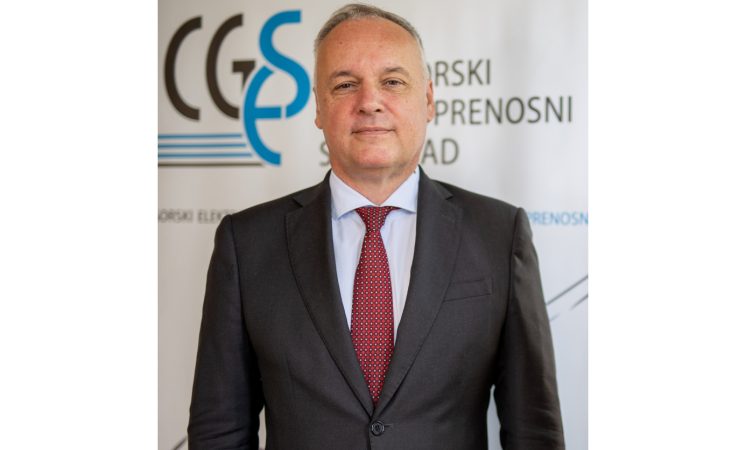
Podgorica, (MINA-BUSINESS) – The Montenegrin Electricity Transmission System (CGES) achieved a net profit of EUR 24.8 million last year, announced the chairman of the company's Board of Directors. Aleksandar Mijušković, and added that he would continue with investment and development to meet the growing needs of users.
"Everything that has been achieved so far is not only a testament to our commitment, but also creates new opportunities for further development and innovation. In the past year, we have achieved an outstanding result and a net profit of EUR 24.8 million," he said. Mijušković gave an interview to the Mina-business agency.
He recalled that the company has recorded excellent business results since its foundation, and since 2021, even historic ones.
I would like to remind you that in that year we made a profit of €16.9 million in 2020, €20.3 million in 2021, while in 2022 we had a record profit of a staggering €35.7 million. which is a total profit of almost 100 million EUR since I was first appointed Chairman of our company's Board of Directors," specified Mijušković.
He added that this confirms the strength of the company's vision and strategy, as well as the dedication of the team and all employees.
"It is important to note here that our company's operations are regulated by the Regulatory Agency for Energy and Public Utilities (REGAGEN), so the profit achieved, in accordance with the regulatory mechanism, is subject to adjustments," stated Mijušković.
According to him, the decisive factors behind this success are, first and foremost, the implementation of significant infrastructure projects, investment in new technologies, as well as a significant improvement in work processes.
"The emphasis on the realisation of important, and we can freely say, visionary projects, has contributed to a significant increase in our revenue from electricity transit, ...while by applying new technologies and improving work processes in all areas of our business, we have created a much more efficient and reliable system with a historically low loss rate, despite much higher energy transit and flow through our system," explained Mijušković.
When asked in what way and to what extent CGES has influenced the electricity transmission tariffs for system users this year, Mijušković replied that the company's business results bring multiple benefits, not only to CGES's shareholders but also to all users of the electricity system.
"In recent years, CGES has, with its good business results, influenced the reduction of the electricity transmission tariff paid by citizens and businesses in Montenegro," Mijušković announced.
For this year specifically, the total price of electricity was supposed to be 5.73 per cent higher for all households with a two-tariff meter.
"However, the tariff adjustment for electricity transmission for this year, by which the price of CGES's services was reduced by as much as 9.5 million EUR, resulted in that percentage increase in the total price of electricity for this largest consumer category being reduced to 3.41 per cent," explained Mijušković.
He emphasised that the increase in prices and tariffs on bills did not occur, in large part, because the adjustment of CGES's profits in previous years was used to reduce the transmission tariff for this year.
"This is supported by the fact that in the past year, the electricity transmission tariff accounted for around 6.6 per cent of electricity consumption bills," whereas that percentage, following REGAGEN's decision on the adjustments to CGES's regulated allowed revenue for this year, is 4.5 per cent," said Mijušković.
Speaking about CGES's investments in the transmission system, given the numerous projects realised in the previous period, and further plans for development, Mijušković said that CGES, recognising the challenges, is investing in the modernisation and expansion of its capacity to ensure a stable electricity supply for all its customers.
„"A significant number of investments have been realised in the previous period, which I am extremely pleased about. The efforts made have brought about tangible improvements in the quality and reliability of the electricity transmission network," said Mijušković.
However, as he said, the company is aware that many challenges still lie ahead.
We will continue with investment and development to ensure even better performance and meet the growing needs of users. through a five-year investment plan, worth 207 million EUR, which provides for significant infrastructure projects. Thanks to these investments, opportunities for growth, infrastructural progress and an improved quality of life for citizens across the whole of Montenegro will be created," emphasised Mijušković.
He singled out the largest infrastructure projects, firstly, The Trans-Balkan Corridor, the implementation of which will significantly increase the capacities for energy transit from the Balkan Peninsula to Italy and fulfil the necessary conditions for connecting Montenegro's electricity market with the Italian, and indeed the single European electricity market.
These include projects to increase the capacity of existing and establish new interconnections with neighbouring countries, as well as significant projects to strengthen the internal network, which are necessary to successfully integrate all planned renewable energy sources into the system.
The aspect of the security and reliability of the electricity system's operation is also significant, as Mijušković pointed out.
He stated that the 'green transition', as the replacement of conventional fossil fuel-powered electricity sources with environmentally friendly, renewable ones is popularly known, has brought significant challenges for the electricity system of the whole of Europe.
As the generation of electricity from renewable sources cannot be controlled, large, uncontrolled flows of electricity have begun to appear in the power system, which threaten the stability and security of the system's operation. These problems can only be effectively resolved by strengthening the internal grid and interconnections with neighbours, which CGES has foreseen in its plans and is working on with dedication," said Mijušković.
Furthermore, as he emphasised, a key aspect in resolving these problems is the development of new mechanisms for regional cooperation and coordinated work to ensure the security of the electricity system at a regional and European level.
"To date, we have initiated with neighbouring transmission operators the implementation of several different mechanisms to preserve the regional security of the system, and together with them we are making great efforts to overcome all the operational challenges, of which there are now many," said Mijušković.
When asked how many employees CGES currently has and how that figure compares to 2009, when the company became independent, Mijušković replied that it is bThe number of employees as of 31 March this year was 340, whereas in 2009 they had 316 employees.
"So, in the past 16 years of business, only 24 more employees," stated Mijušković.
He emphasised that at the same time the transmission network was significantly expanded.
The number of high-voltage substations has increased from 19 to 30, while the length of the power lines has increased from 1,27 thousand kilometres to 1,55 thousand kilometres, while the complexity of all business processes has been greatly increased.
I would emphasise that we are a company that pays special attention to and constantly invests in human resources, as well as in improving efficiency and rationality in our operations. However, I will make a comparison with regional TSOs, which have a vastly larger number of employees than we do, enabling them to deal more effectively with the increasingly complex challenges in the electricity sector," added Mijuškovič.
For example, The Croatian HOPS, Albanian OST, and Macedonian MEPSO increased their number of employees by 15, 20, and 40 per cent respectively for the period 2010-2024, a similar trend to that seen with other transmission companies in Europe.
Mijušković stated that the success of CGES is due to the selfless effort, work and dedication of the employees, who, with their knowledge and commitment, have met every challenge in the best possible way.
Their motivation and dedication to their tasks contribute to us completing every project to the highest standard, which is a source of pride for our entire company. So, the fact that we have achieved all these successes with only a slight increase in our headcount over the past 16 years speaks volumes about their efficiency, dedication and exceptional commitment," concluded Mijušković.