Market liberalisation inevitable in the future
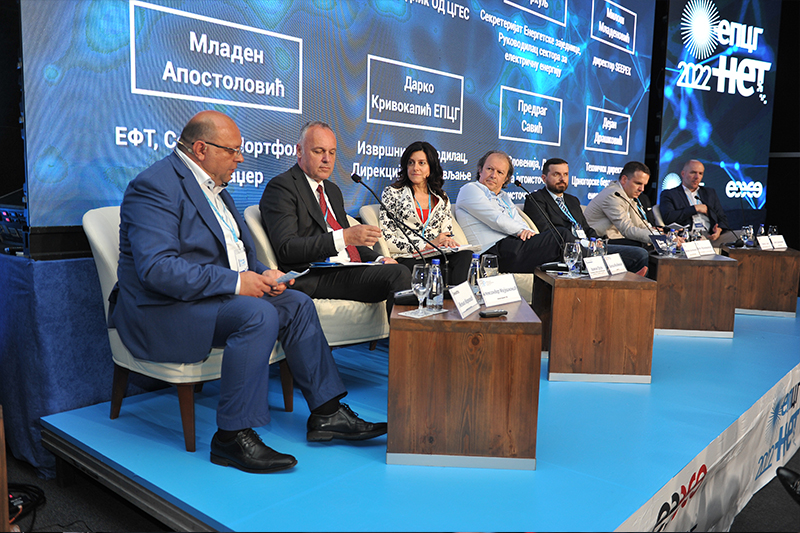
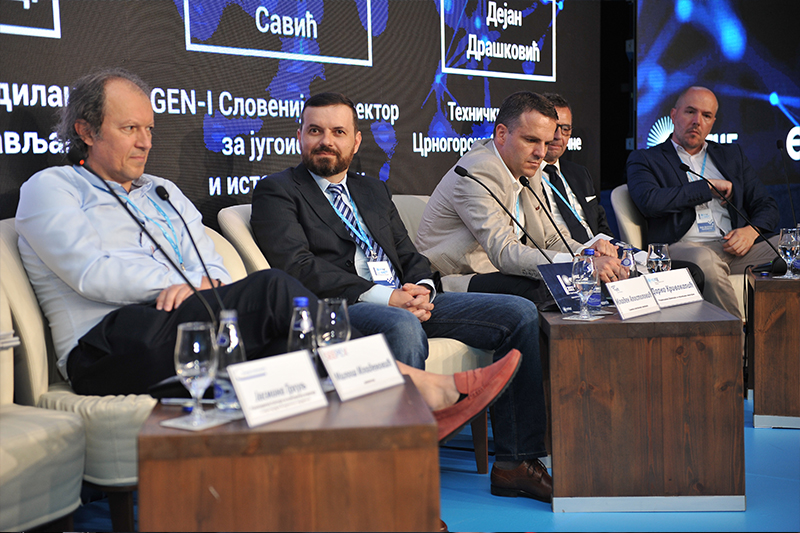
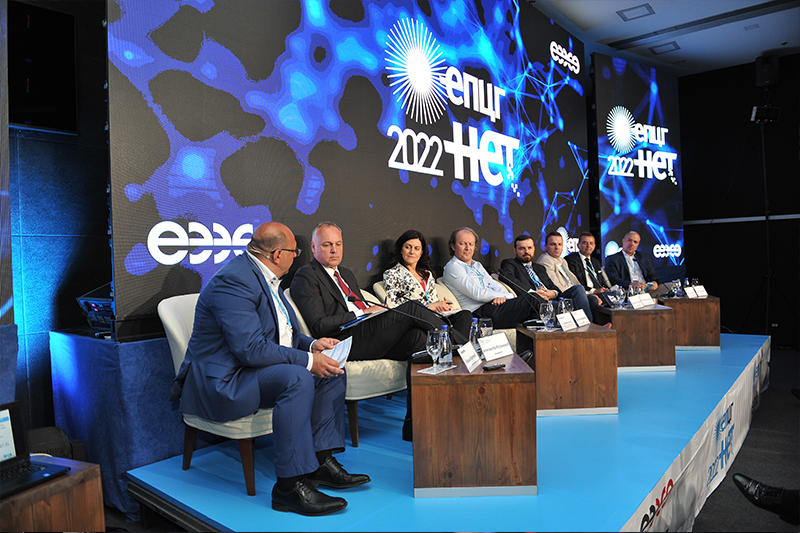
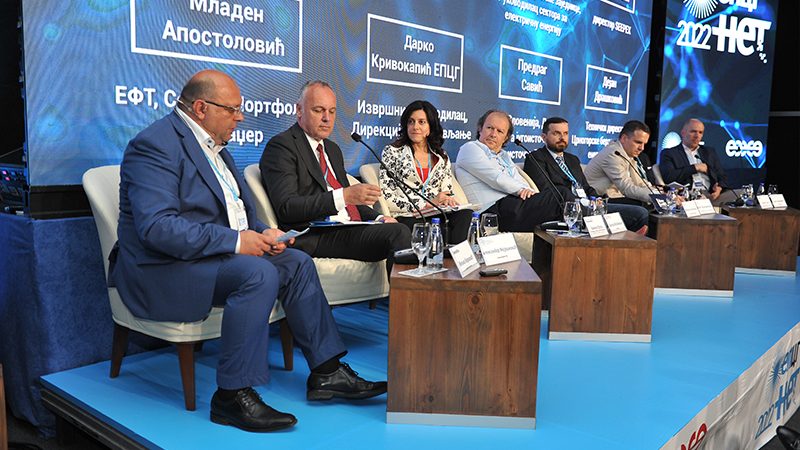
The energy crisis is not an emergency, but a new reality, and the regionalisation of the market is an inevitability for the future. was the message at the panel discussion 'Market Liberalisation and the Benefits of Establishing a Regional Electricity Exchange', held as part of the NET 2022 conference, organised by Elektroprivreda Crne Gore (EPCG).
President of the CGES Board of Directors, Aleksandar Mijušković, He said that Montenegro has become a hub in the region, given that Terna is one of the owners of CGES because of the cable with Italy.
We have a direct connection to Italy and a well-developed connection with neighbouring countries, which allows us to open our borders as much as possible and be there for electricity trading. Montenegro is also home to the Co-ordination Auction House for Transmission Capacities for South-Eastern Europe (SEECAO). This is another advantage and an opportunity to trade as much and as effectively as possible," said Mijušković.
He pointed out that CGES achieved a record business result last year. "We had a profit of 117 million. In the first quarter, we already have a profit of six million. So, I expect a record result this year as well. Since our foundation, we have almost doubled our assets," stated Mijušković.
He recalled that CGES had established the electricity exchange, whose owners are CGES, COTTE and EPCG.
Head of the Electricity Sector at the Secretariat of the Energy Community, Jasmina Trhulj, She said that the energy crisis is not a state of emergency, but that it is the new reality.
"I think it's difficult to say that there have been any systemic reforms. All the changes that have taken place and the decisions that have been made in the energy sector of our countries have largely been driven by firefighting and by how to mitigate the consequences of the crisis," stated Trhulj. She pointed out that in the regional market, the price of electricity had hardly changed anywhere.
"This leads us to conclude that there will be too much pressure on the energy companies in the region, which are the dominant players and supply the entire market. The retail price has only been changed in Macedonia since 1 January. There we have an 11 per cent increase in the price for households and small customers," said Trhulj. According to her, there had been significant pressure on companies in the past period, particularly in Macedonia, Serbia and Kosovo, where the countries were net importers.
"They were importing at a price three to five times higher, yet still selling at the same price. It is perfectly clear that such a situation cannot continue without serious consequences for those companies," said Trhulj.
He considers the best indicator of the situation in the market to be the level of new investment, assessing that there is insufficient in the region. Trhulj announced that the Energy Community will review the measures and will launch proceedings against countries where it finds that the measures have distorted the market and were not in accordance with the Energy Community's regulations.
Director of SEEPEX, Miloš Mladenović He said that in the region of central and south-eastern Europe, three or four years before Covid, the average market price was around fifty euros. That price was used in addition to being the reference price for new investors and futures markets. In the early years of Covid, the price fell due to a decline in industrial production. It was below 40 euros, and in 2021 it was around fifty euros. As of tomorrow, the price on SEEPEX since the beginning of the year has averaged 220 euros," stated Mladenović. He indicated that the estimate for ten-year futures products for our region would be at the level of 150 euros. "So much for price forecasts in the wholesale market," added Mladenović.
Technical Director of the Montenegrin Electricity Exchange/BELEN, Dejan Drašković, He recalled that they had a clear vision that they could raise the issue, stating that they had received the Government's support to proceed in that direction. "We began preparing the new Call for a competitive procedure in 2020, which resulted in us securing exceptionally reliable partners for the implementation of the day-ahead market in Montenegro," stated Drašković. The implementation, he said, is going better than expected. We expect the clearing system to be implemented in a month, when we should begin certain tests. As for the technical implementation of the system, I can praise my colleagues from France. We expect the technical implementation to be completed in three to four months, so we will have all the necessary conditions to begin testing and start operational functioning," stated Drašković. He pointed out the problem facing energy entities regarding the inflexibility of the VAT Act, stating that amendments to the act have been included in the Government's plan and are scheduled for the third quarter of this year. "We see that in the near future, the regionalisation of the market will be inevitable. However, one of the key prerequisites for accession to the EU is the establishment of a local stock exchange so that we can take the next step, which is the merging of markets," said Drašković.
Representative of the Energy Management Directorate at EPCG, Darko Krivokapić, He said that Montenegro is at an energy standstill, but that due to a good hydrological year, they can tolerate low prices. "What the restructuring of the market itself and the emergence of exchanges have helped to do is to bring out the flexibility of our production," Krivokapić explained. He believes that the recent sharp change in the market has revealed 'small cracks that we were all aware of, but were jumping over and covering up'.
Senior Portfolio Manager at EFT, Mladen Apostolović, He said that the question of the price of electricity is no longer in question, stating that it is high and could be even higher. "The question arises whether we will have enough electricity if we continue to increase consumption. We need to save energy," said Apostolović.
Representative Predrag Savić of GEN-i Slovenia said that the region had a major energy crisis in February 2012, in the spring of 2016, but that we are also facing a major energy crisis now. "I think the crux of the matter is that we can currently call this an energy crisis, but I'm afraid we're talking about a new reality. I don't think any of us can see a rosy picture for the energy situation," said Savić.
On the second day of the Symposium, the topics are: business models, financing conditions and opportunities for using EU funds to invest in the energy sector and the decarbonisation of the energy sector – challenges of introducing CO2 emission costs. and the application of a carbon border adjustment mechanism for the countries of the region.