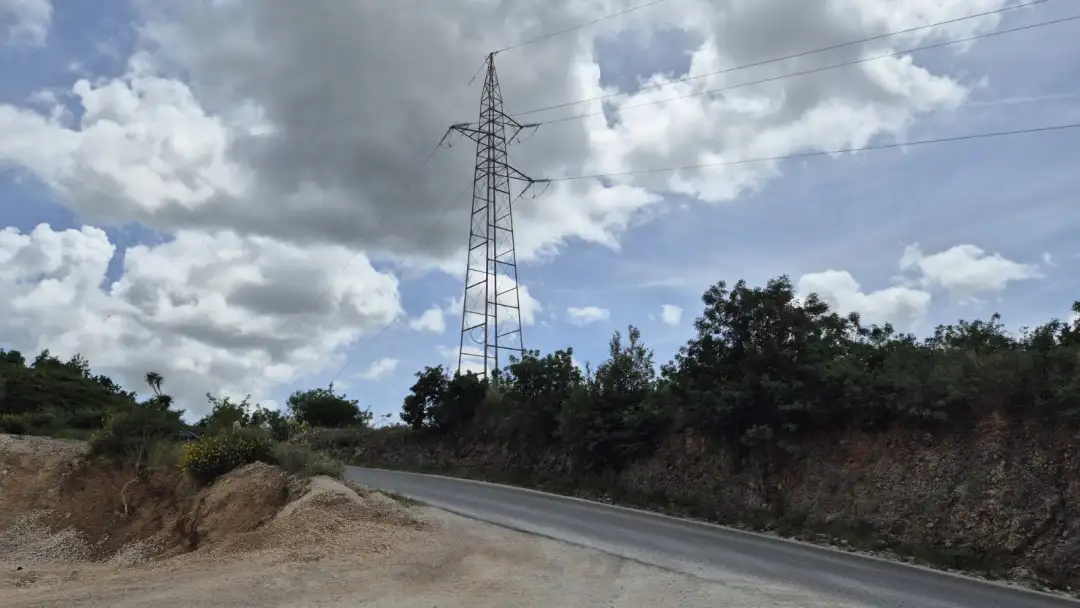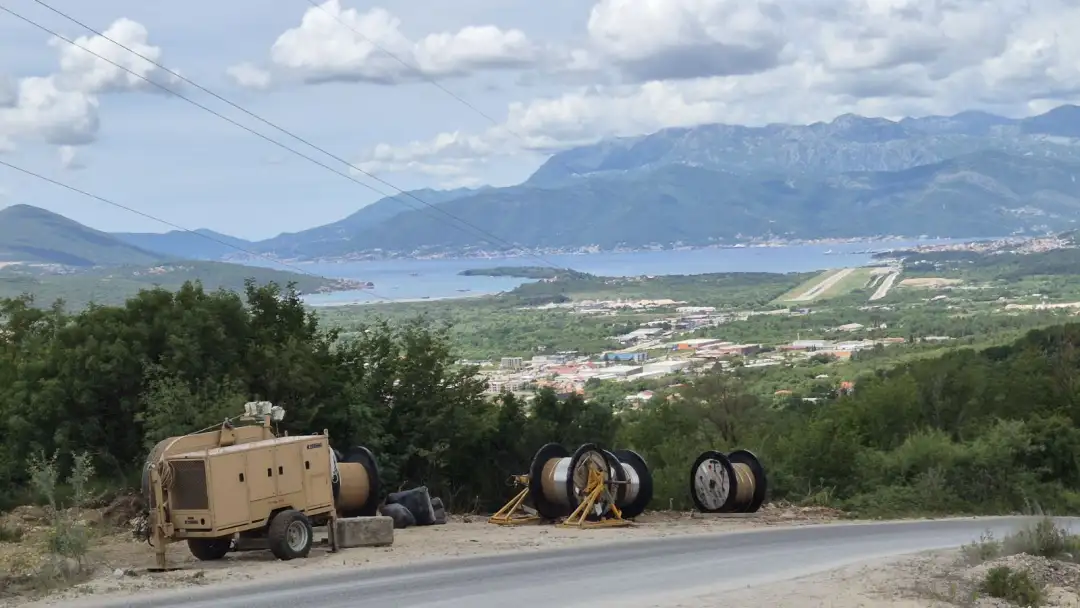
Podgorica, (MINA-BUSINESS) – Crnogorski elektroprenosni sistem (CGES) is nearing the reconstruction of ‘’Budva–Lastva ‘’and ‘’Lastva–Tivat’’ transmission lines, with a total investment value of approximately EUR 1 million. The project is of major importance for reliable electricity supply across the wider coastal region of Montenegro.
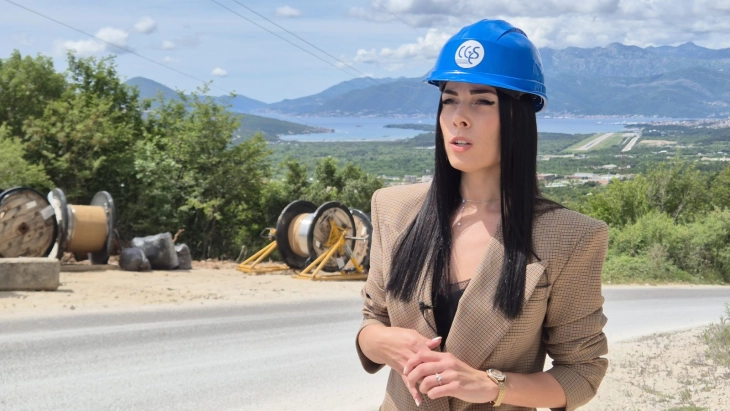
According to Milica Vranić, an engineer in the Development and Investment Sector at CGES, the reconstruction works cover approximately 17 kilometers of transmission infrastructure and include the replacement of conductors, insulators, suspension and jointing equipment.
“It is approximately EUR 1 million worth of investment and the second transmission network modernization project in Montenegro, following the successful implementation of a similar project in 2024,” Vranić told the Mina-Business agency.
These transmission lines are of exceptional importance for ensuring a reliable power supply to the wider coastal area, including Budva, Tivat, Kotor, and Herceg Novi.”
Vranić said the project is vital for the reliability and stability of the coastal region’s power supply, especially during peak summer demand.
According to her, the growing demands of the system and the increasing network load have further confirmed the necessity of strengthening transmission capacities in this area.
“In order to maximize the benefits of the 400/110/35 kV Lastva substation and ensure stable operation of the power system following the commissioning of the Italy–Montenegro submarine interconnection, technical analyses identified the need to upgrade the transmission capacity of the 110 kV ‘’Budva–Lastva ‘’ and ‘’Lastva–Tivat’’ lines’’.
She explained that the growing need to expand transmission network capacities, combined with limitations related to safety clearances, required the implementation of advanced technological solutions, specifically the installation of high-temperature low-sag conductors. Although dimensionally compatible with the existing conductors, these solutions enable significantly higher transmission capacity and more reliable network operation.
The transmission lines have been equipped with modern next-generation conductors that allow the transmission of larger quantities of electricity and ensure safer network operation even under high loads and elevated temperatures.
The project is expected to substantially reduce the risk of grid congestion and power outages during periods of peak demand, especially throughout the tourist season. However, the long-term stability of the power system can only be ensured through continued development of the transmission infrastructure, particularly through the planned construction of the 110 kV "Lastva–Kotor" transmission line as one of the highest-priority projects,” Vranić said.
The works are being carried out by Elnos Inženjering under demanding terrain conditions and in accordance with strict technical standards prescribed by equipment manufacturers.
“It is also important to highlight that CGES professionals were actively involved in the project implementation and, in addition to supervising the works, completed both theoretical and practical training for the maintenance of this type of transmission line,” Vranić said.
This has created the conditions for the new technology to be fully and properly applied and utilized in the future operation of the system.”
According to Vranić, CGES will continue intensive investments in the development and modernization of the transmission network in the coming period, with the aim of further enhancing the stability, security, and reliability of Montenegro’s power system.
“Under the five-year investment plan through 2030, CGES plans investments exceeding EUR 200 million aimed at further modernization of the transmission network, integration of renewable energy sources, and strengthening of regional interconnections, Vranić said.
A standout project is the upgrade of the 220 kV interconnection between Bosnia and Herzegovina, Montenegro, and Albania, whose importance was also recognized by the European Bank for Reconstruction and Development through a EUR 15 million loan facility. The agreement was signed in March, and project implementation is already underway.