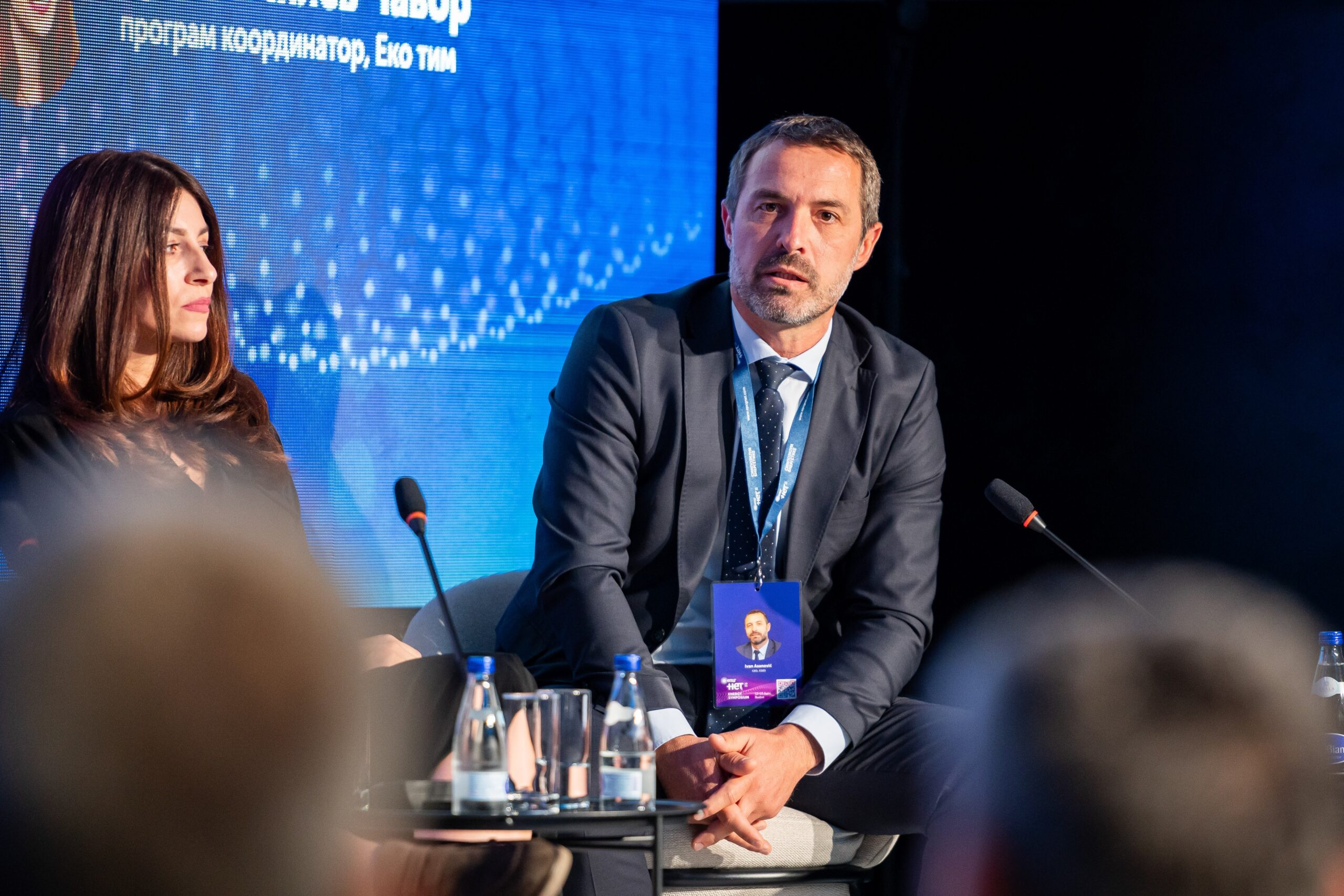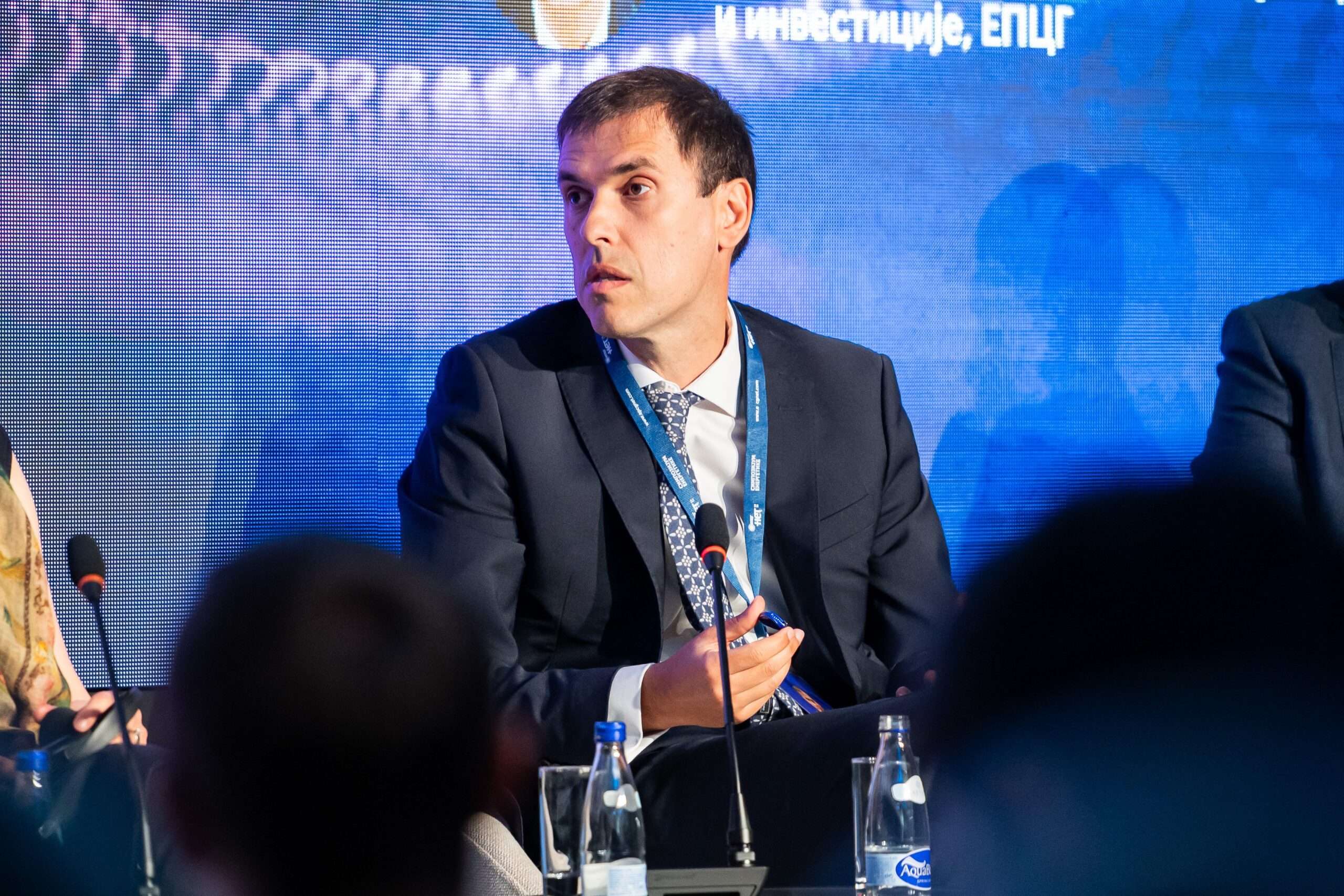
On the second day of the EPCG NET 2026 Symposium, the panel discussion “Electricity Market Integration and the Impact of CBAM Implementation” attracted considerable attention and generated strong interest among participants. Ivan Asanović, General Director of CGES, took part in the discussion alongside Dejan Drašković (BELEN), Martin Martinoski (Energy Community), Jan Bohinec (GEN-I Slovenia), Filip Marković (SEE CAO), Luka Prodanović (EPCG), and Diana Milev Čavor (Eco team). The panel delivered clear messages on the pressing challenges associated with the implementation of the Carbon Border Adjustment Mechanism (CBAM) and highlighted the importance of market integration for the stability and independence of our power system.
Asanović noted that, from the very beginning, CGES had been recognized as a future green energy corridor and had therefore embarked on an ambitious and determined programme to develop a transmission system capable of integrating significant volumes of electricity generated from renewable energy sources.
Addressing the impact of the CBAM mechanism, Asanović emphasized that its effects are reflected across all segments of the power sector, including the allocation of cross-border transmission capacities, which has also had a significant impact on CGES’s operations. Nevertheless, he stressed that the company remains fully committed to its long-term development strategy.
“We continue to view ourselves as the region’s future green energy transit route and remain fully committed to further network development. We believe that continued alignment with the European energy framework, together with the introduction of the Emissions Trading System (ETS), will help overcome the current challenges. For that reason, we will not slow down— we will continue to invest strongly in expanding and modernizing the transmission network,” Asanović stated.
He particularly highlighted the completion of the Lastva–Pljevlja transmission line, one of the longest transmission lines in Europe, describing it as an important milestone toward CGES’s next strategic objective— the doubling of the capacity of the submarine interconnection between Montenegro and Italy from 600 MW to 1,200 MW, in cooperation with its Italian partner, Terna.
“Our objective is to enable all electricity producers to competitively access the European Union market through reliable infrastructure and deeper market integration,” Asanović said.
He further emphasized that CGES, in its role as the transmission system operator, will continue to actively contribute to the electricity market integration process, including by providing expert input during the transposition of European energy legislation into the national regulatory framework.
“We will continue to build a modern, reliable and European-compatible transmission system that will serve as a cornerstone of the energy transition and the further development of Montenegro’s power sector,” Asanović concluded.
CGES’s professional expertise was also highlighted during the panel discussion “Financing Renewable Energy Projects”, with participation of Dragan Perunović, Director of Sector for Development and Investments.
Perunović noted that, through its investment programme valued at approximately EUR 200 million, CGES will create the conditions necessary for the further and more extensive integration of renewable energy sources, supported by long-standing and trusted financial partners. He also stressed the importance of further regulatory adjustments concerning grid connection applications, particularly the transition from the “first come, first served” principle to a “first ready, first served” approach.
“It is important to understand the complexity of developing network infrastructure,” Perunović emphasized.
“Network development means building the infrastructure that underpins the entire power system. It is not simply a matter of building a connection to a specific location where an investor intends to develop a solar power plant or a wind farm. It requires the construction of transmission lines, substations and other supporting infrastructure to ensure that the facility can be integrated into the wider network,” he explained.
Perunović added that strong investor interest in solar energy projects began several years ago, following the significant increase in electricity market prices.