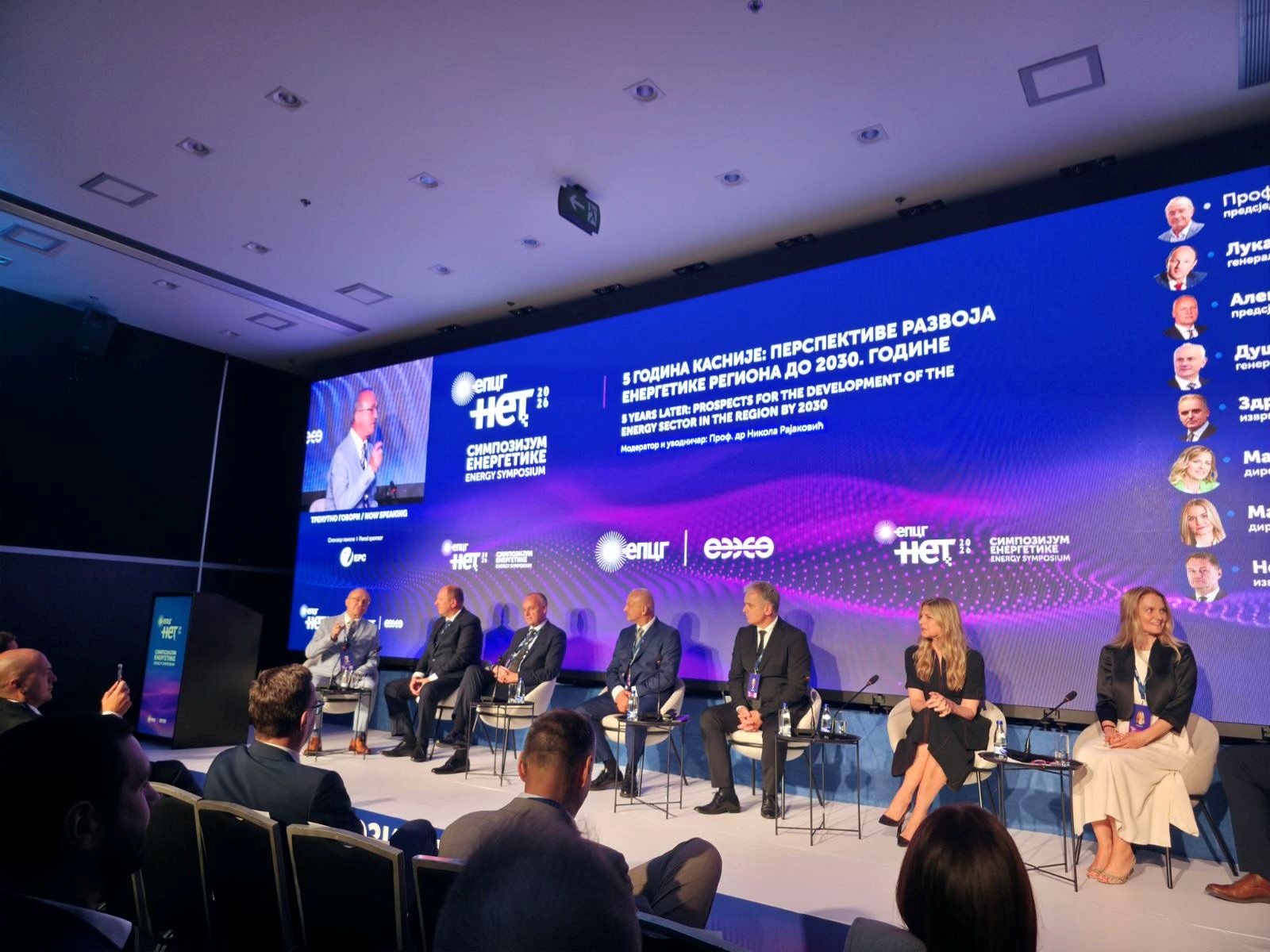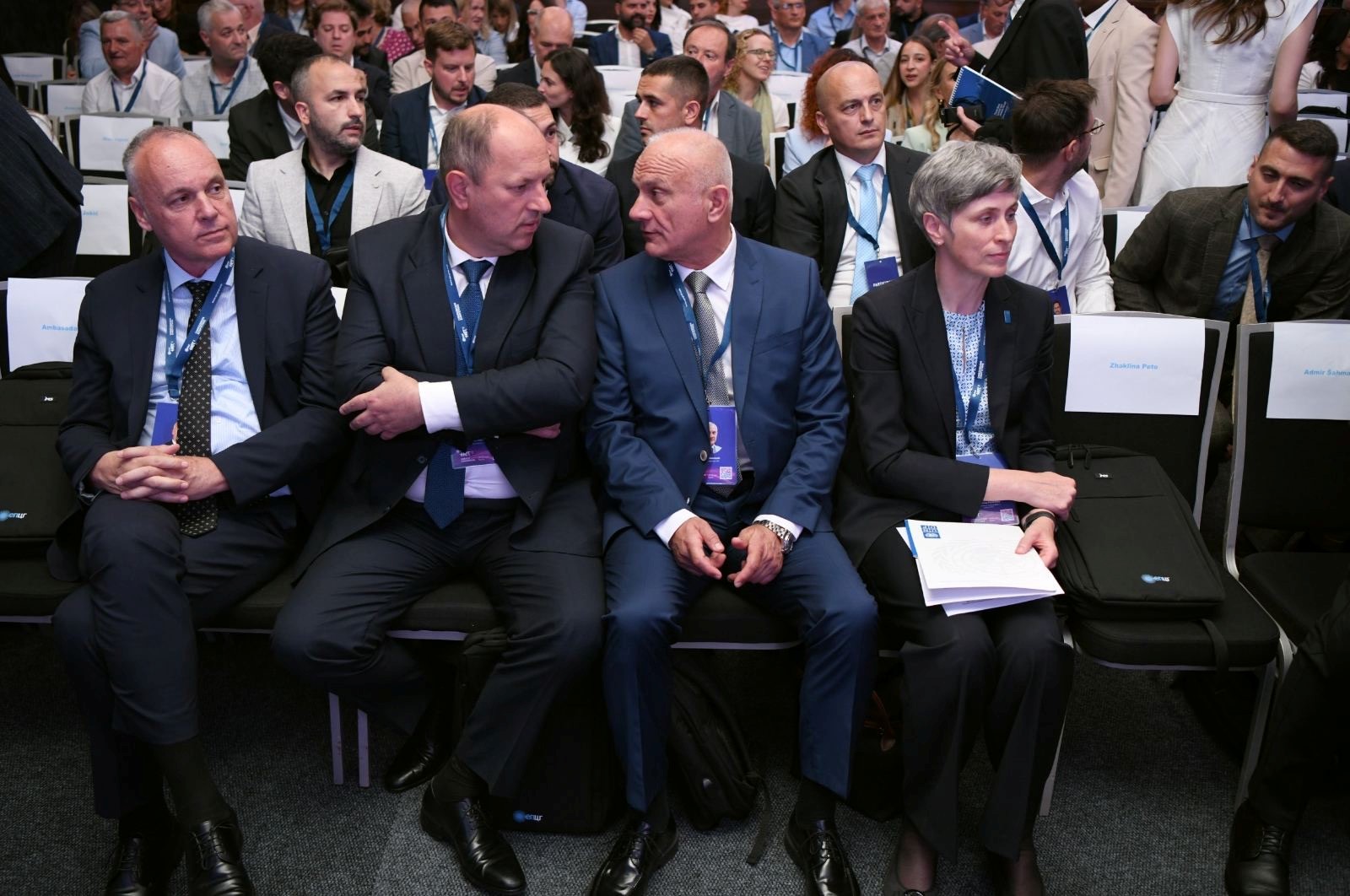
The fifth EPCG NET Symposium opened today in Budva, reaffirming its role as a recognized platform for dialogue among energy companies, institutions, investors, financial organizations, and experts from across the region and Europe.
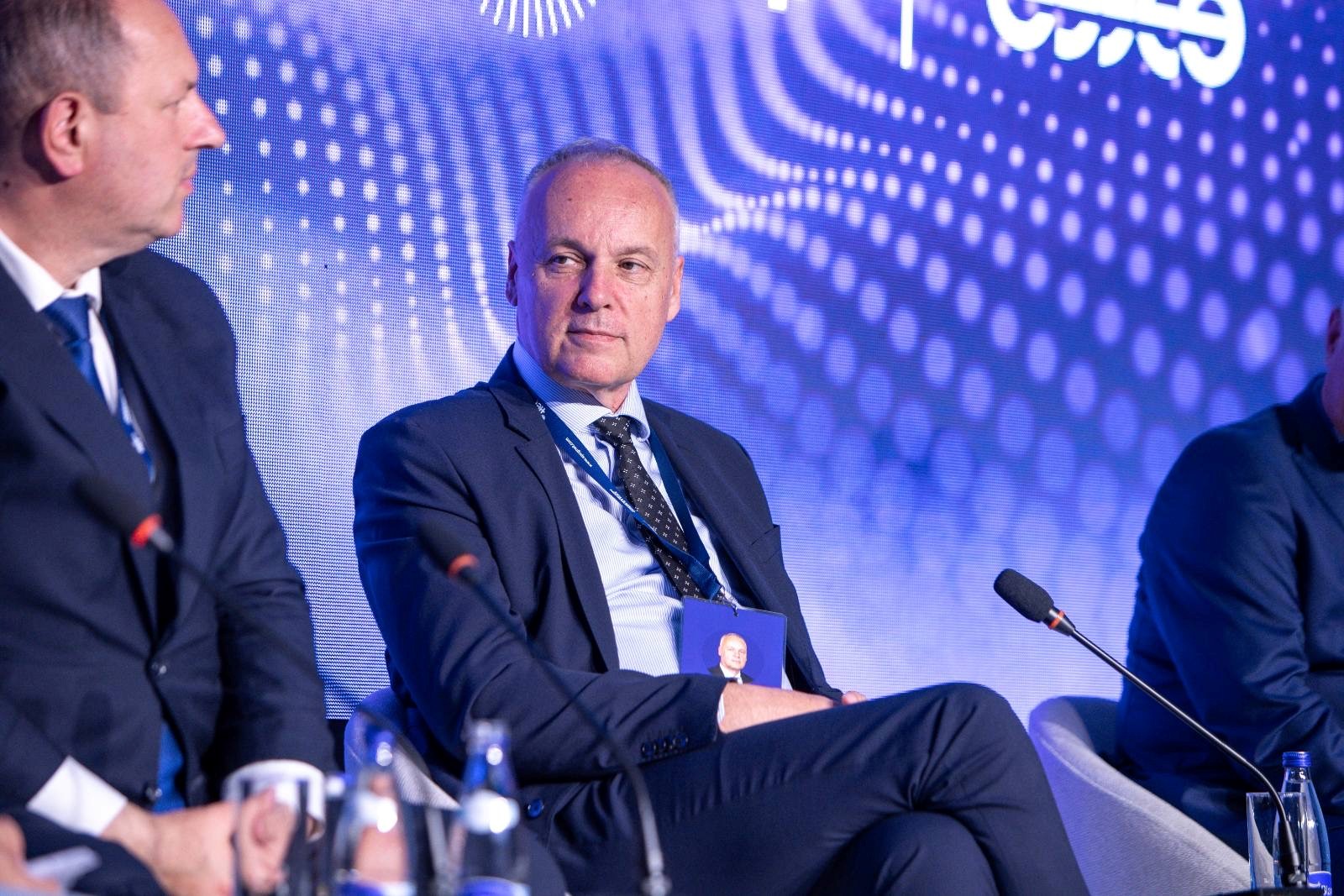
Aleksandar Mijušković, Chairman of the Supervisory Board of CGES, participated in the panel discussion “Five Years Later: Prospects for the Development of the Regional Energy Sector by 2030,” moderated by Prof. Dr. Nikola Rajaković. In addition to Mijušković, the panel was attended by Luka Petrović, General Manager of MH ERS; Dušan Živković, General Manager of EPS; Zdravko Dragaš, CEO of EPCG; Maja Turković, Europe Director at CWP Global; Maja Pokrovac, Director of Renewable Energy Sources Croatia; and Nemanja Laković, CEO of RU (The Pljevlja Coal Mine).
The panel generated significant interest among the professional audience and provided valuable insights into the future of the regional energy sector. Below, we present the key messages delivered by Aleksandar Mijušković, Chairman of the Supervisory Board of CGES.
Asked whether Montenegro’s transmission network is ready for the challenges of accelerated renewable energy sources development and whether it is keeping pace with the expansion of new generation capacities in Montenegro, the region, and beyond, Mijušković emphasized:
“Montenegro’s transmission network is fully prepared to meet the challenges of the energy transition. We have received grid connection applications for projects with a total capacity of approximately 7 GW, while connection agreements have been signed for around 2.8 GW. However, a significant number of these projects have yet to enter the implementation phase.
What I would like to emphasize clearly is that CGES is ready. Our transmission system is robust, stable, and continuously being upgraded to support the further development of renewable energy sources.
In particular, I would like to highlight that only a few days ago we completed the construction of the 400 kV Lastva–Pljevlja transmission line, one of the most significant energy infrastructure projects ever implemented in Montenegro. I am pleased to announce that the line will be energized by the end of June, further strengthening the security and reliability of the national power system.
I would also like to remind the professional community that the shunt reactor is already in operation. This facility is of exceptional importance not only for Montenegro, but also for the stability of the regional transmission network.
In parallel, we will increase the transmission capacity of the 220 kV Trebinje–Montenegro–Albania interconnection through the installation of a high-temperature conductor. This upgrade will enable more efficient electricity transmission and facilitate the integration of new generation capacities.
Today, we have substantial transmission capacities at our disposal, but we are not stopping there. We are working intensively to create additional opportunities that will enable all interested users to connect to the transmission grid and contribute fully to the further development of green energy in Montenegro and the wider region.”